





Author: Jagdish Vaidya, Ayurveda Practitioner
Holy Basil: Nature's The Sacred Herb in Ayurveda
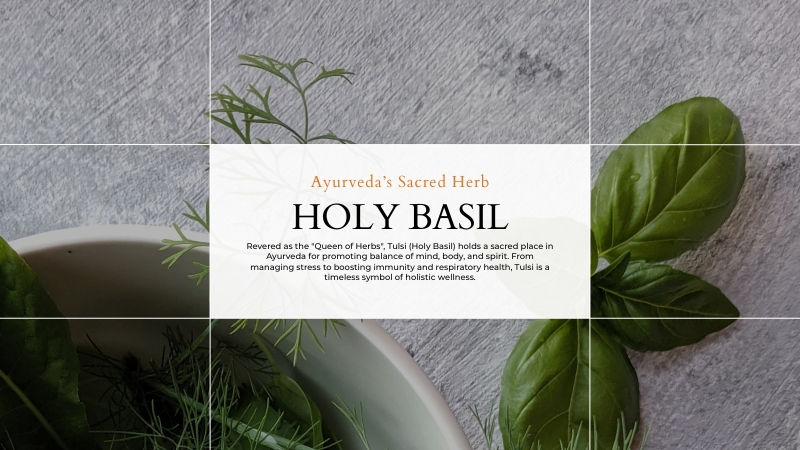
Holy basil, known as Tulsi in Sanskrit, is one of the most revered herbs in Ayurveda. Regarded as a sacred plant, Tulsi has been used for centuries in Ayurvedic traditions for its ability to support overall well-being. Mentioned in texts like the Charaka Samhita and Bhavaprakasha Nighantu, it is traditionally valued for promoting balance in mind, body, and spirit.
Why Holy Basil?
Holy basil is renowned for its numerous health benefits:
1. Adaptogenic and Stress-Supportive Properties: In Ayurveda, Tulsi is considered an adaptogen, believed to support the body's natural stress response and promote emotional balance. It is traditionally used to maintain harmony in Prana Vata and Sadhaka Pitta, which govern mental clarity and emotional well-being.
2. Supports Natural Immunity: Tulsi is regarded as an Ojovardhaka (nourisher of Ojas), the vital energy associated with immunity and resilience. Ayurvedic formulations often include Tulsi for seasonal wellness support.
3. Promotes Cognitive Function: Ayurvedic texts describe Tulsi as a Medhya (mind-supporting) herb, traditionally believed to aid in focus and clarity while supporting balanced mental energy.
4. Rich in Antioxidants and Detoxifying Properties: Tulsi’s Tikta Rasa (bitter taste) and Ushna Virya (heating potency) are traditionally associated with its ability to support natural detoxification and protect the body from oxidative stress.
5. Traditionally Used for Respiratory Wellness: As an Expectorant and Kapha-balancing herb, Tulsi has been included in Ayurvedic formulations for supporting clear breathing and overall respiratory function.
Ways to Incorporate Holy Basil into Your Routine
Tulsi can be enjoyed in various Ayurvedic preparations:
-
Herbal Tea: Brew fresh or dried Tulsi leaves in warm water for a soothing beverage.
-
Capsules or Extracts: Convenient for daily supplementation.
-
Culinary Use: Fresh Tulsi leaves can be added to dishes or raw salads for a flavorful boost.
Important Considerations
-
Use in Moderation: Due to its Ushna Virya (warming nature), individuals with high Pitta dosha should consume Tulsi mindfully.
-
Consult an Ayurvedic Practitioner: For personalized guidance, especially if pregnant, breastfeeding, or taking medications.
A Balanced Approach to Wellness
Tulsi has long been a symbol of holistic wellness in Ayurveda. By incorporating it into a daily routine, one can align with traditional Ayurvedic wisdom for overall balance and vitality.